SHRI SHIVAJI SCIENCE COLLEGE, AMRAVATI
DBT STAR COLLEGE PROJECT ACTIVITY
ACTIVITY REPORT

Industrial Visit to MIDC Dawargaon, Amravati
Activity Dates: 21-02-2026
Type of Activity: Outreach Activity
Organizing Department: Department of Chemistry
Program Coordinators: Dr. N.R. Thakare, Dr. H.G. Wankhade, Dr.S.P. Ingole
Head of the Department: Dr. P.R. Mandlik
External Collaborator (if any): MIDC Office Dawargaon, Amravati
Objectives:
- To give industrial exposure to studemts
- To know the working of industry
- To know about manufacturing processes
- To know about the marketing of industrial products
- To know about placement apportunities
No of Beneficieries: 88
Classes Involved: B. Sc III
Venue of the Activity: MIDC Dawargaon, Amravati
Activity Report:
Siyaram Silk Mills Ltd. (Denim & Fabric Division)
Location: MIDC, Amravati, Maharashtra Date of Visit: Saturday, 21 Feb 2026.
Class : B.Sc. 3rd year Bio (CBZ)
Organized By :- Department Of Chemistry Teacher In charge :-
1. Dr. N. R. Thakare
2. Dr. H. G. Wankhade
3. Dr. A. M. Mopari
4. Ms. R. D. Bankar
Introduction
An industrial visit was conducted at the Siyaram Silk Mills Ltd. manufacturing unit located in the Amravati MIDC. Siyaram's is one of India's leading manufacturers of
fabrics and readymade garments. The primary objective of this visit was to observe and understand the real-time manufacturing processes involved in denim and fabric production, specifically focusing on yarn preparation, rope dyeing, long chain
beaming, and knitting.
Plant Overview and Production Strategy
The Amravati plant operates on a massive scale, producing both finished fabrics and processed yarns. An interesting commercial insight gathered during the visit is the
plant's production distribution:
Captive Consumption: 50% of the processed yarn is utilized internally for their own fabric production.
Commercial Market: The remaining 50% is bundled and sold directly in the market to other textile manufacturers.
Detailed Manufacturing Process
The visit covered several key departments, demonstrating the sequential flow from yarn packages to finished fabrics.
A. Yarn Preparation & Ball Warping
The first major step observed was the preparation of yarn for dyeing.
Capacity: The yarn packages handle massive lengths, ranging from 30,000 to 40,000 meters.
Machinery: The unit operates 4 Ball Warping machines.
Throughput: Each machine has a capacity to process 480 yarns simultaneously. Here, multiple yarns are gathered into a rope form and wound into large "balls" or logs,
which prepares them for continuous dyeing.
B. Indigo Rope Dyeing Process
Denim gets its characteristic look from the indigo rope dyeing process. The plant utilizes a continuous multi-stage dyeing range. The process flow observed was:
Pre-wash: Cleaning the yarn to ensure optimal dye absorption. Dye Box: The yarn ropes pass through multiple indigo dye baths. Post-wash Box: Removing excess, unfixed dye from the surface.
Softener Application: Treating the yarn to improve its handling for the next mechanical steps.
Drying & Storage: The dyed yarn is dried over heated cylinders and stored temporarily.
C. Long Chain Beaming (LCB)
After dyeing, the yarn in rope form must be converted back into a flat sheet for weaving or knitting.
Process: The dyed ropes are passed through Long Chain Beaming (LCB) machines. The plant has 14 of these machines.
Tension Application: Strict tension is applied to separate the ropes back into individual threads (1-1 thread separation).
Denting & Cone Winding: The threads pass through a reed (denting) to keep them parallel and are wound onto cones or weaver's beams.
Quality Control: The yarn then goes through the checking and packing department before being distributed.
D. Fabric Formation: Knitting Department
While traditional denim is woven, the visit also covered the plant's extensive knitting section, which produces stretch fabrics and T-shirt materials.
Machinery: The plant is equipped with advanced Mayer & Cie circular knitting machines.
Materials Processed: They process T-shirt fabrics, Denim-look polyester blends, and Lycra fabrics (used specifically for stretchable garments).
Machine Mechanics: The circular knitting machines feature a central cylinder equipped with needles (operating on 1, 2, 3, 4 needle setups) and utilize up to 96 cams (systems) to create the fabric design.
Finishing touches: The machines have mechanical cutters and spreaders to handle the continuous tubular fabric as it is knitted.
E. Inspection & Packaging
The final stage involves the Spinning/Fabric department packages undergoing
rigorous quality inspection. The approved fabrics are rolled, finished, and sent to the packaging department for final dispatch.
Conclusion
The visit to Siyaram’s Amravati unit provided invaluable practical exposure to large-scale textile manufacturing. Witnessing the continuous rope dyeing process, the
precision of Long Chain Beaming, and the high-speed Mayer & Cie knitting machines bridged the gap between theoretical knowledge and industrial application. It also
highlighted the operational scale required to supply both captive garment manufacturing and the open yarn market.
Industrial Visit Report
Shri Shivaji Science College Amravati Department of chemistry, Organized educational/industrial Visit to Surya Lakshmi Cotton Mills Ltd. Amravati on 21St of February 2026 third year BIO and PCM group.
Visit was organized under DBT star project under prior permission of our honorable principal Dr. G V Korpe sir and Head of the Department of Chemistry Dr. Mandlik sir. The industrial Visit was coordinated by Dr. Thakare sir , Dr. Bankar Mam, Dr. Ingole Mam and Dr. Wankhade Mam. We visit the industry in group of 15-20 students.
Suryalakshmi a leading manufacturer, marketer, and retailers of finest suiting and cotton shirting fabrics .
During visit students observed various machines involved in cleaning and processing of the cotton. The machine is for separating sand and other impurities from Cotton. The next is well opening sliver machine. Tgen L-D2 breaker to control the waste product. The next machine is for finishing. Tgen LD-1 finisher is for high power finishing. The fresh cotton product is isolated ultimately.
Then another sliver machine is to made thick and thin robins and it is converted into whatever the size of thread we want and finally plane and stretchable fiber is obtain. Then the product is moved to packing section. Students cleared their queries by asking questions to particular leader.
Industrial Visit proved to be a learning and fruitful experience for students and faculty members. It is very informative visit we enjoyed it. we hope that this visit help us in our future practical life and bring a positive change in our thinking and practical behavior regard our future endeavors.
Siyaram Silk Mills Ltd. (Denim & Fabric Division)
Location: MIDC, Amravati, Maharashtra Date of Visit: Saturday, 21 Feb 2026.
Class : B.Sc. 3rd year Bio (CBZ)
Organized By :- Department Of Chemistry Teacher In charge :-
1. Dr. N. R. Thakare
2. Dr. H. G. Wankhade
3. Dr. A. M. Mopari
4. Ms. R. D. Bankar
Introduction
An industrial visit was conducted at the Siyaram Silk Mills Ltd. manufacturing unit located in the Amravati MIDC. Siyaram's is one of India's leading manufacturers of
fabrics and readymade garments. The primary objective of this visit was to observe and understand the real-time manufacturing processes involved in denim and fabric production, specifically focusing on yarn preparation, rope dyeing, long chain
beaming, and knitting.
Plant Overview and Production Strategy
The Amravati plant operates on a massive scale, producing both finished fabrics and processed yarns. An interesting commercial insight gathered during the visit is the
plant's production distribution:
Captive Consumption: 50% of the processed yarn is utilized internally for their own fabric production.
Commercial Market: The remaining 50% is bundled and sold directly in the market to other textile manufacturers.
Detailed Manufacturing Process
The visit covered several key departments, demonstrating the sequential flow from yarn packages to finished fabrics.
A. Yarn Preparation & Ball Warping
The first major step observed was the preparation of yarn for dyeing.
Capacity: The yarn packages handle massive lengths, ranging from 30,000 to 40,000 meters.
Machinery: The unit operates 4 Ball Warping machines.
Throughput: Each machine has a capacity to process 480 yarns simultaneously. Here, multiple yarns are gathered into a rope form and wound into large "balls" or logs,
which prepares them for continuous dyeing.
B. Indigo Rope Dyeing Process
Denim gets its characteristic look from the indigo rope dyeing process. The plant utilizes a continuous multi-stage dyeing range. The process flow observed was:
Pre-wash: Cleaning the yarn to ensure optimal dye absorption. Dye Box: The yarn ropes pass through multiple indigo dye baths. Post-wash Box: Removing excess, unfixed dye from the surface.
Softener Application: Treating the yarn to improve its handling for the next mechanical steps.
Drying & Storage: The dyed yarn is dried over heated cylinders and stored temporarily.
C. Long Chain Beaming (LCB)
After dyeing, the yarn in rope form must be converted back into a flat sheet for weaving or knitting.
Process: The dyed ropes are passed through Long Chain Beaming (LCB) machines. The plant has 14 of these machines.
Tension Application: Strict tension is applied to separate the ropes back into individual threads (1-1 thread separation).
Denting & Cone Winding: The threads pass through a reed (denting) to keep them parallel and are wound onto cones or weaver's beams.
Quality Control: The yarn then goes through the checking and packing department before being distributed.
D. Fabric Formation: Knitting Department
While traditional denim is woven, the visit also covered the plant's extensive knitting section, which produces stretch fabrics and T-shirt materials.
Machinery: The plant is equipped with advanced Mayer & Cie circular knitting machines.
Materials Processed: They process T-shirt fabrics, Denim-look polyester blends, and Lycra fabrics (used specifically for stretchable garments).
Machine Mechanics: The circular knitting machines feature a central cylinder equipped with needles (operating on 1, 2, 3, 4 needle setups) and utilize up to 96 cams (systems) to create the fabric design.
Finishing touches: The machines have mechanical cutters and spreaders to handle the continuous tubular fabric as it is knitted.
E. Inspection & Packaging
The final stage involves the Spinning/Fabric department packages undergoing
rigorous quality inspection. The approved fabrics are rolled, finished, and sent to the packaging department for final dispatch.
Conclusion
The visit to Siyaram’s Amravati unit provided invaluable practical exposure to large-scale textile manufacturing. Witnessing the continuous rope dyeing process, the
precision of Long Chain Beaming, and the high-speed Mayer & Cie knitting machines bridged the gap between theoretical knowledge and industrial application. It also
highlighted the operational scale required to supply both captive garment manufacturing and the open yarn market.
Industrial Visit Report
Shri Shivaji Science College Amravati Department of chemistry, Organized educational/industrial Visit to Surya Lakshmi Cotton Mills Ltd. Amravati on 21St of February 2026 third year BIO and PCM group.
Visit was organized under DBT star project under prior permission of our honorable principal Dr. G V Korpe sir and Head of the Department of Chemistry Dr. Mandlik sir. The industrial Visit was coordinated by Dr. Thakare sir , Dr. Bankar Mam, Dr. Ingole Mam and Dr. Wankhade Mam. We visit the industry in group of 15-20 students.
Suryalakshmi a leading manufacturer, marketer, and retailers of finest suiting and cotton shirting fabrics .
During visit students observed various machines involved in cleaning and processing of the cotton. The machine is for separating sand and other impurities from Cotton. The next is well opening sliver machine. Tgen L-D2 breaker to control the waste product. The next machine is for finishing. Tgen LD-1 finisher is for high power finishing. The fresh cotton product is isolated ultimately.
Then another sliver machine is to made thick and thin robins and it is converted into whatever the size of thread we want and finally plane and stretchable fiber is obtain. Then the product is moved to packing section. Students cleared their queries by asking questions to particular leader.
Industrial Visit proved to be a learning and fruitful experience for students and faculty members. It is very informative visit we enjoyed it. we hope that this visit help us in our future practical life and bring a positive change in our thinking and practical behavior regard our future endeavors.
Outcomes:
- Student get information about industrial workig
- Students get information about manufacturing processes
- Students get information about marketing ideas
- Students get idea about placement apportunities in industry sector
- Student get information about courses required for industry skills
Photos:
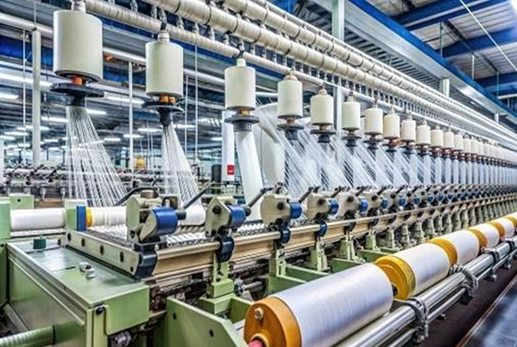
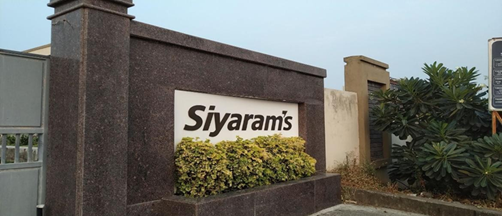 Siyaram Textile Industry | 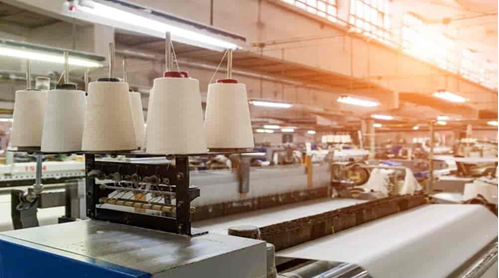 Inside factory view |
 Manufacturing processes | 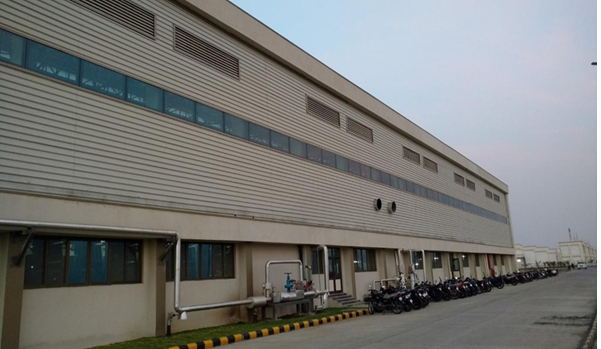 Suryalaxmi Industry |
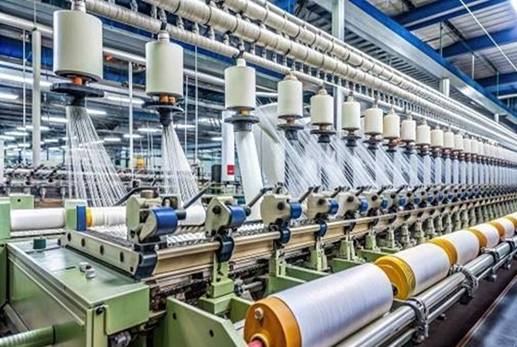 Manufacturing process | 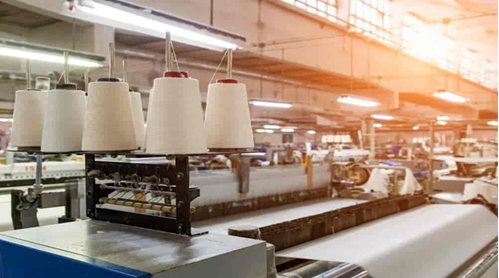 Inside the factory |
Attendance Sheet:
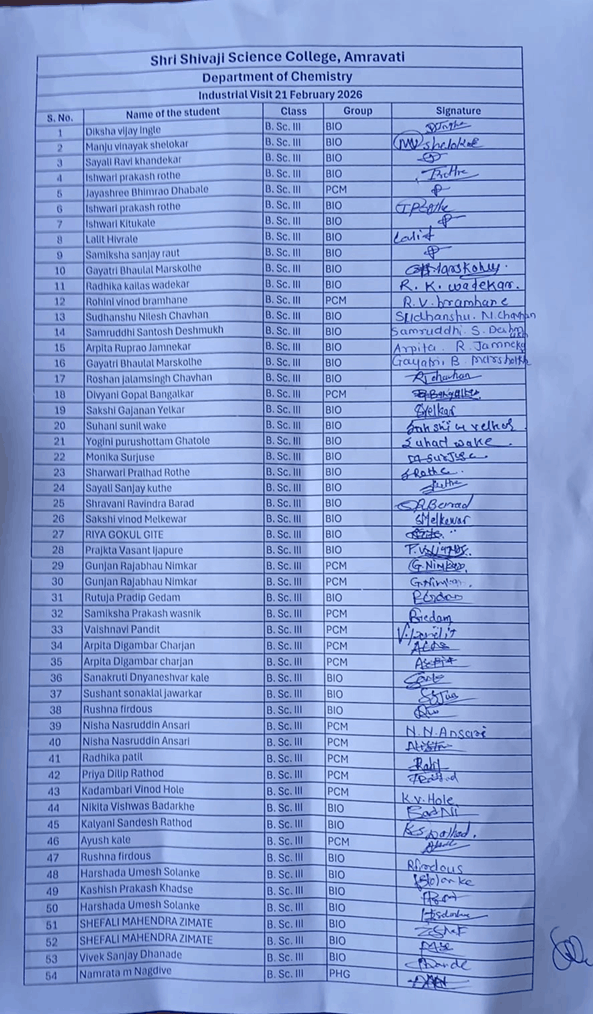 |
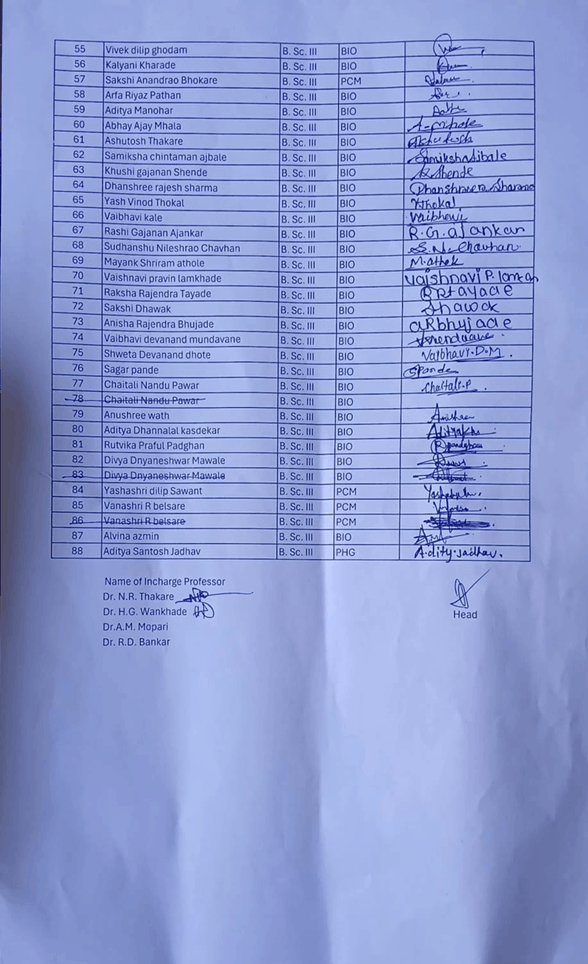 |